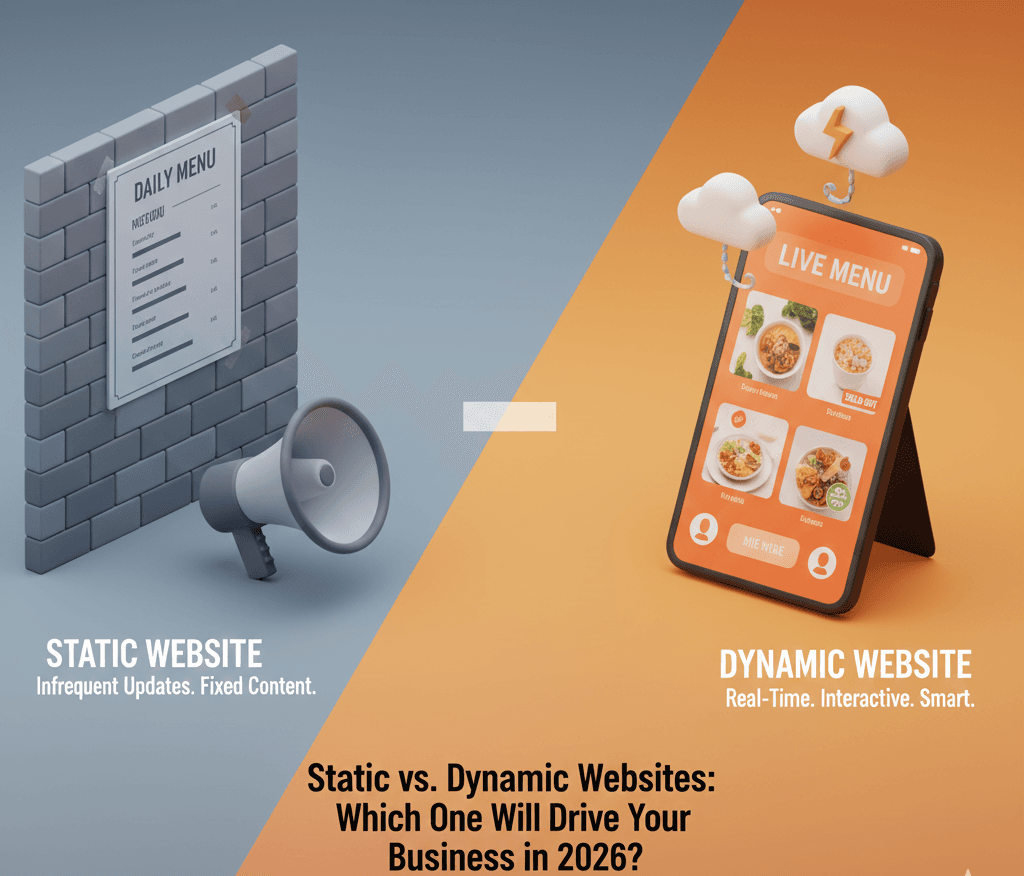
Static vs. Dynamic Websites: Which One Will Drive Your Business in 2026?
When you’re looking to build a new home for your business online, you’ll likely hear developers throw around the terms "Static" and "Dynamic." To a non-tech person, this sounds like jargon. But to a business owner, these terms represent two completely different ways of interacting with your customers. Choosing the wrong one can lead to a website that is either unnecessarily expensive or frustratingly limited.
At Softwara, we believe in transparency. Let’s break down these two types of websites using a simple, human metaphor so you can decide which one fits your 2026 vision.
The Restaurant Metaphor
Imagine you are walking down a busy street looking for a place to eat.
- A Static Website is like a Printed Menu in the Window. It’s beautiful, clear, and tells you exactly what is available. However, if the chef changes a dish or the price of salmon goes up, someone has to physically scrape the old menu off and stick a new one on. It doesn't change based on who is looking at it.
- A Dynamic Website is like a Digital Tablet Menu at your Table. It knows if it’s breakfast or dinner time. It can show you a video of the steak being grilled. If a dish is sold out, it disappears instantly. It can even remember that you’re allergic to peanuts and highlight the safe options for you.
What is a Static Website? (The "Digital Brochure")
A static website is built using simple code (HTML and CSS) that stays the same for every visitor. The files are "pre-built" and sit on a server waiting for someone to view them.
The Pros:
- Blazing Speed: Since there is no "thinking" for the server to do, these sites load almost instantly.
- Security: There is no database to hack, making them incredibly secure.
- Lower Cost: Usually cheaper to host and maintain.
The Cons:
- Hard to Update: You can't just log in and change a word. You usually need a developer (like the team at Softwara) to update the code.
- No Interaction: You can't have "User Accounts," "Shopping Carts," or "Live Search."
Best for: Small portfolios, simple "About Us" pages, or landing pages for a single product.
What is a Dynamic Website? (The "Interactive Engine")
A dynamic website is "alive." It uses a database and "server-side" languages (like JavaScript or Python) to generate a unique page for every user.
The Pros:
- Total Control: Using a Content Management System (CMS), you can change text, images, and prices yourself in seconds.
- High Functionality: This is how you build E-commerce stores, booking systems, and member-only portals.
- Personalization: It can show different content to a first-time visitor versus a returning loyal customer.
The Cons:
- Complex Build: Requires more technical expertise to build correctly.
- Maintenance: Needs regular updates to stay fast and secure.
Best for: Online stores, news blogs, real estate listings, and any business that wants to scale.
Why Softwara Does Things Differently in 2026
In the past, you had to choose one or the other. But at Softwara, we leverage the "Next-Gen" tech of 2026. We often build Hybrid Websites.
We use modern frameworks that give you the speed of a static site with the power of a dynamic database. This means your site loads in less than a second (keeping Google happy), but you still have a simple dashboard where you can manage your business without calling us for every small change.
Which One Do You Need? (The Quick Checklist)
Go Static if:
- You rarely need to update your content.
- Your primary goal is just to show a phone number and an address.
- You have a very tight initial budget.
Go Dynamic if:
- You want to blog or post news regularly.
- You want customers to book appointments or buy products online.
- You want to use AI-driven tools to interact with your visitors.
Conclusion: Don't Build for Yesterday
Choosing between static and dynamic isn't just a technical choice—it's a business strategy. A static site is a great start, but a dynamic site is a growth engine.
At Softwara, we don't just "make websites." We sit down with you to understand your 5-year plan. We make sure that the foundation we build today won't have to be torn down tomorrow when your business takes off.
Ready to build a site that actually works for you?